


MAY 3 - The first 3 execution of Irish Nationals following Easter Rising 1916

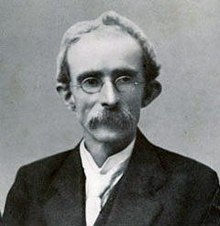
On this day in 1916, the English officials in Dublin began executing leaders of Easter Rising. Thomas Clarke, Thomas MacDonagh, and Patrick Pearse where all executed by firing squad in Kilmainham Gaol.
Thomas Clarke was born 11 March 1858 in Hampshire, England to Irish parents James Clarke and Mary Palmer. His father was a Sergeant in the British army and was transferred in 1865, to Co. Tyrone, Ireland where Thomas grew up. At the age of 20 Clarke joined the Irish Republican Brotherhood (IRB) and within 2 years was the head of the local IRB circle. After some time in prison for activities with the IRB, he moved to New York where he married Kathleen Daly with whom he had 3 children. In 1907, they moved back to Ireland where he opened a tobacconist shop in Dublin and became very involved with IRB. Clarke was highly involved in the planning of the Rising and was located at headquarters in the GPO for the duration of the Rising. After the surrender he was arrested. Before his execution, he asked his wife to give a message to the Irish people, "My comrades and I believe we have struck the first successful blow for freedom, and so sure as we are going out this morning so sure will freedom come as a direct result of our action...In this belief, we die happy.”
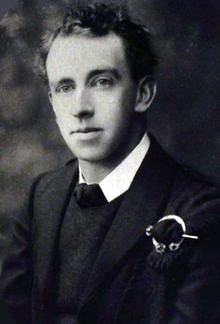
Thomas MacDonagh was born 1 February 1878 in Co., Tipperary, Ireland to Joseph MacDonagh and Mary Parker. Both of his parents were teachers and he grew up in a house full of music, poetry and learning. He spent much of his life teaching and published several poetry books. In 1912, he married Muriel Gifford with whom he has a son and a daughter. In 1913, MacDonagh attended the inaugural meeting of the Irish Volunteers and joined its Provisional Committee. He was later appointed Commandant of Dublin’s 2nd battalion, and eventually was made commandant of the entire Dublin Brigade. While credited as one of the leaders of the Rising, he was not added to the council that planned the rising until April 1916. During the Rising, his battalion was stationed at the complex of Jacob’s Biscuit Factory. The British avoided the factory as they established positions in central Dublin so despite having one of the strongest battalions MacDonagh and his men saw little fighting. After the surrender he was arrested and court-martialed. It is said that when he was taken from his cell to be executed he whistled.

Patrick Pearse was born 10 November 1879 in Dublin to James Pearse and Margaret Brady. Pearse was raised from a very early age to fight for the cause of Irish freedom. He once spoke about being 10 years old and praying to God, promising that he would dedicate his life to Irish freedom. In November 1913, Pearse was invited to the inaugural meeting of the Irish Volunteers. In December 1913, Pearse was sworn into the IRB and by 1915 was on it’s Supreme Council and secret Military Council. When the Rising began, Pearse read the Proclamation of the Irish Republic from outside the GPO. He was the person most responsible for drafting the Proclamation, and was chosen as President of the Republic. After 6 days of fighting, Pearse issued the order to surrender. Patrick Pearse is often remembered as the voice of the Rising and is honored in Dublin with the street he grew up on, now named for his family.

Comments